
For decades, conversations about economic mobility have centered on income. We have measured success by whether families earn more, whether wages increase, or whether someone crosses an arbitrary income threshold. Those measures matter, but they have never told the whole story.
The Aspen Institute’s Financial Security Program recently published Essential Wealth: A New Benchmark for Financial Security, introducing a framework that asks a different question. Rather than measuring whether families have enough income to get by, the report focuses on whether they have accumulated the wealth necessary to withstand setbacks, pursue opportunities, and plan confidently for the future. The report finds that only 26 percent of U.S. households have reached what it defines as “essential wealth,” while three out of four households have not.
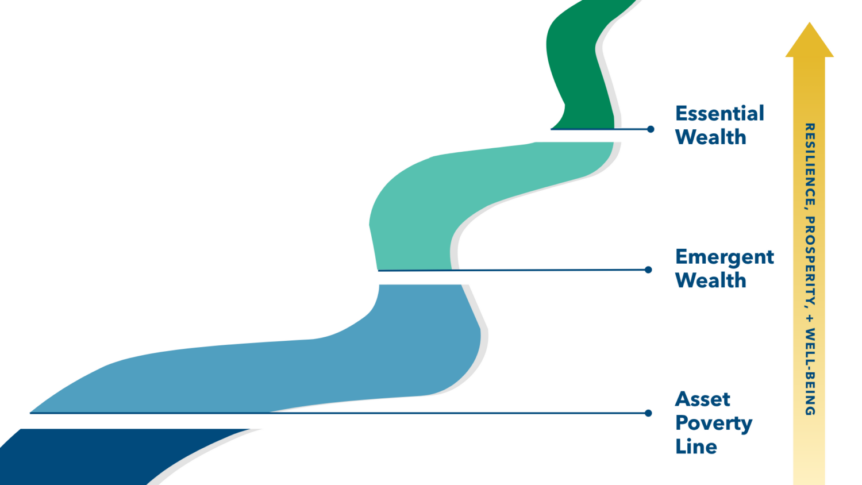
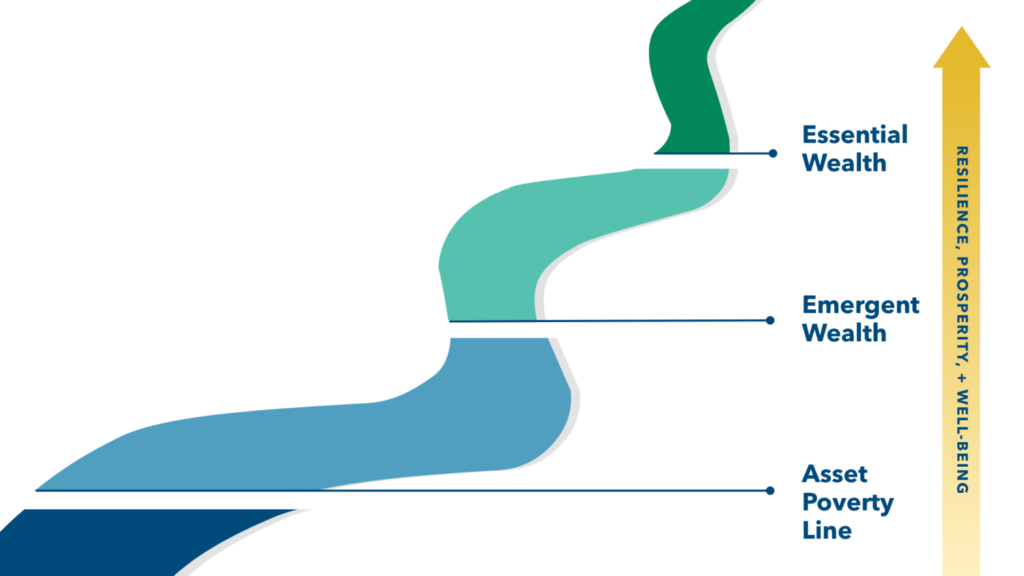
Aspen describes a progression from asset poverty, to emergent wealth, to essential wealth. Rather than defining financial security by income alone, the framework recognizes that families move along a continuum as they accumulate appreciating assets and build greater financial resilience. It is an important contribution because it gives the field a shared way to think about progress beyond income.
Some of the most important moments in any field are not when entirely new ideas emerge, but when research gives language to what practitioners have observed through experience.
For nearly twenty years, WANDA has understood that some of the greatest and most sustainable financial gains come from owning assets that increase in value. Whether through homeownership, retirement savings, business ownership, education, or other appreciating assets, those investments build wealth, help families weather setbacks, and create opportunities that can benefit future generations.
The report provides an important framework for understanding what builds financial security. The next challenge is understanding how more families can realistically achieve it.
Helping families acquire appreciating assets takes more than good intentions. It requires time, investment, trusted relationships, access to capital, and systems that work together rather than independently. Today, many of the pathways that lead to wealth-building, including housing, education, entrepreneurship, retirement savings, and financial services, operate in separate systems with separate funding streams. Families, however, experience them as one journey.
Over the past two decades, we have learned that when those pieces come together, something powerful happens. Families begin building assets, but they also begin building confidence. Success creates momentum. Momentum leads to new goals, new investments, and continued progress. Wealth-building is not a single transaction. It is a process that compounds over time.
Essential Wealth is an important contribution to the national conversation because it gives the field a more meaningful way to define financial security. Defining the destination is an important first step. Creating pathways to reach it is the work that lies ahead. That work cannot fall to any one sector. Philanthropy, government, financial institutions, employers, educational institutions, and nonprofit organizations all have a role to play in expanding access to appreciating assets. The challenge is not simply to identify what builds wealth, but to build partnerships that make wealth-building possible for more families. We welcome this conversation and hope it continues to evolve from defining essential wealth to ensuring more families have a meaningful opportunity to achieve it. Danika Dellor, Executive Director